
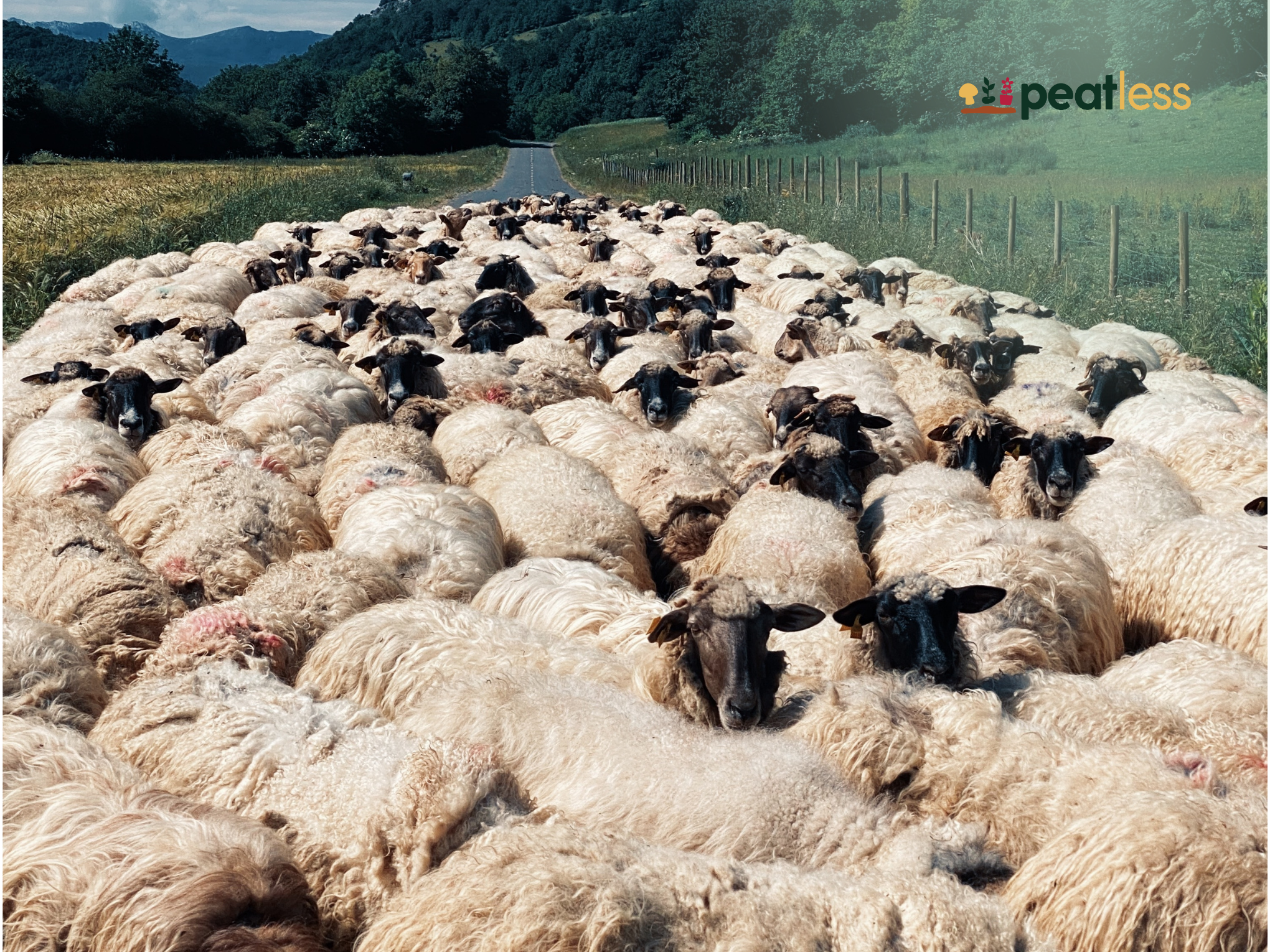
Can sheep wool help reduce peat use in horticulture?
PEATLESS is exploring the use of sheep wool powder as a component of reduced-peat and peat-free growing media for vegetable seedlings.
Reducing peat use in horticultural growing media requires alternative formulations that can provide suitable conditions for plant development. The PEATLESS project brings together partners from across Europe to develop and test growing media made from alternative materials for seedling production, mushroom cultivation and ornamental horticulture.
Within the project, the Agrifood Research and Technology Centre of Aragon (CITA) is investigating whether sheep wool could form part of new growing media for vegetable seedlings.
The research focuses on low-value wool, an underused resource for which CITA is exploring different agricultural applications. These include its use as agricultural mulch, its incorporation into composting processes and the extraction of keratin for the development of sustainable materials.
PEATLESS examines another possible application: using sheep wool powder as an ingredient in growing media for vegetable seedlings. CITA has also introduced students to the characteristics of alternative materials and growing media through its Fascination of Plants Day activities.

Sheep wool powder at CITA facilities

Studies at CITA facilities
Wool as part of a growing media formulation
Sheep wool is not being evaluated as a stand-alone replacement for peat. Instead, it is incorporated as one component of formulations combining several materials.
During the initial screening conducted at CITA, sheep wool powder was included at a proportion of 10% in three different growing media. Two of these formulations contained 20% peat, while the third was completely peat-free.
This approach makes it possible to study wool within different combinations and assess its potential contribution to formulations designed to reduce or eliminate peat use.
Sheep wool is being tested as one component of alternative growing media, rather than as a stand-alone substitute for peat.
Initial testing with lettuce and pepper
The three formulations containing sheep wool were tested with lettuce and pepper seedlings. Their performance was assessed from germination to the stage immediately before transplanting.
These trials provided initial evidence of how seedlings developed in the different growing media. The results were then considered alongside the characteristics of each formulation to identify the most promising options for further study.
Following this first screening, all three formulations containing sheep wool were selected for the next validation phase. In particular, the peat-free formulation containing sheep wool showed good seedling performance in both lettuce and pepper under the conditions of the initial trials.
These findings are promising, although they represent an initial stage of the research and require further validation before broader conclusions can be drawn.
Moving towards further validation
The selected formulations will now undergo a larger trial at CITA. This next phase forms part of the project’s wider process to test and refine alternative growing media before the most promising formulations move towards practical demonstration.
For sheep wool, further validation will be essential to determine whether the initial results can be confirmed under a more extensive experimental design and to continue assessing its potential as a component of reduced-peat and peat-free growing media.
All three formulations containing sheep wool progressed to the next stage, including a peat-free formulation that performed well with both lettuce and pepper seedlings.
By examining this new application, PEATLESS is adding to the research into possible uses for low-value wool while generating evidence about its role in alternative horticultural growing media.


